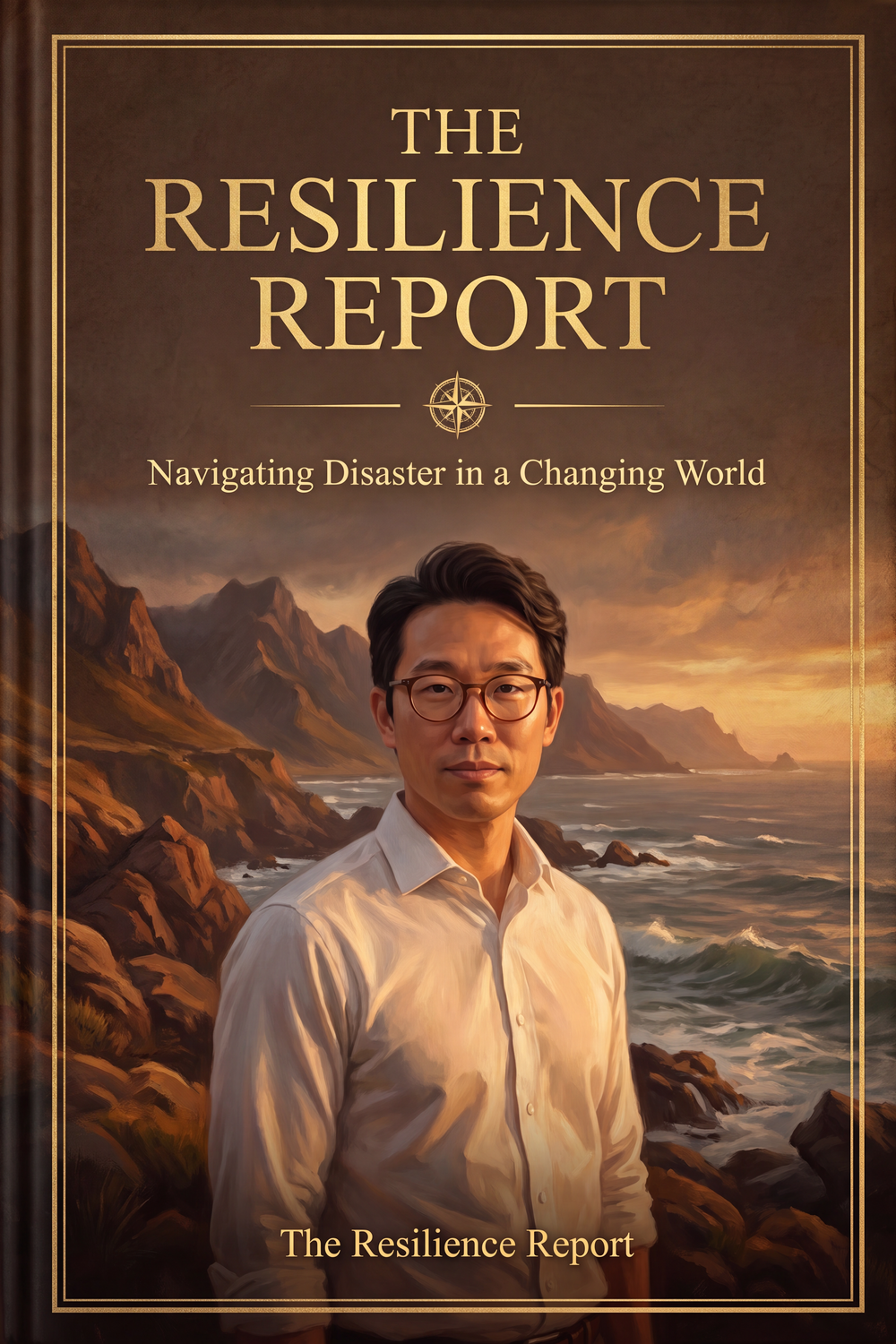
We built this channel on one rule: no guessing, no dramatizing, just the facts, sourced to the people who actually measure the ground and the sky for a living. This field guide widens that same calm, sourced approach — from the fault line beneath your feet to the larger pressure points shaping this moment — so you can size up any alarming headline like an analyst, and get your own household steady, whatever the disruption turns out to be.
The Field Guide
Everything we’ve learned covering disaster and geopolitical science for a living — how to separate real signal from noise, the fault lines actually shaping this moment, and the plain, sensible steps that make a household more resilient. Fourteen chapters, set in order, sourced throughout. This is general information for calm preparedness — not medical, legal, financial, or safety-critical advice.
Field guide · 72 pages · Instant PDF
How to read any “crisis” headline the way an analyst does. The real fault lines behind the stories making the news — the contest between the great powers, the pressure points in energy and money, the strains inside institutions. And just as important: the plain, sensible steps that make your money, your mind, and your household steadier, whether the disruption is a fault line, a storm system, or a shift in the wider world.
What you get for $37:
Instant PDF · Pay once · Yours forever
The Worth Of It
People ask what a field guide like this is really worth. So here it is plain: on the left, the way a nonstop stream of disaster and crisis headlines presses on so many of us. On the right, the steady, sourced way of reading them that this book hands you — the framework that lets you stay informed without staying afraid.
The way so many of us take in the news, story after story
Every line has a chapter in the book, sourced, explained plainly
Worth far more than $37 — not in dollars, but in the quiet of a mind that no longer panics at every headline. Keep it close and you’ll reach for it every time the news gets loud.
What's Inside
Each chapter is written the same calm way: what’s actually happening, what it usually does and doesn’t mean, and the ordinary step that keeps you and your household steady. This is general information for calm preparedness and geopolitical literacy — for anything medical, legal, financial, or safety-critical, see a qualified professional.
A Taste Of It
Three honest tastes of what’s inside — written so you can hear how plain and how sourced they are. These are illustrative passages, not guarantees; every household and every situation is its own.
From the field · Signal vs. noiseMost alarming stories are a one-time event that only sounds dramatic, not a genuine shift in the underlying system. A useful habit, before the chest tightens: ask whether a headline changes a standing arrangement, or just describes a single loud day. Almost always, it’s the second one — and the base rate is calmer than the headline.
From the field · PreparednessReal household readiness has nothing to do with bunkers or a bleak worldview. It’s the same ordinary good sense that leads people to keep a spare tire and a first-aid kit — sized up to cover a multi-day power outage, a storm that closes the roads, or a stretch when supplies run short. Sensible, not survivalist.
From the field · Staying groundedUnderstanding lowers fear — whether you’re watching a seismograph or a headline about the other side of the world. The goal was never to predict the exact day something happens. It was always to understand the real risk, keep it in proportion, and prepare like a sensible adult rather than a frightened one.
Illustrative passages from the book. For general information only; not medical, legal, financial, or safety-critical advice. This report does not predict specific events and is not affiliated with any government agency, news organization, or research institution named within it.
V. About The Resilience Report
We built this channel to cover the stories that shake people the most — literally. Earthquakes. Supervolcanoes. Storms that stall over a coastline for days. Heatwaves that break records. We report on every one of them the same way: no guessing, no dramatizing, just the facts, sourced to the people who actually measure the ground and the sky for a living — the USGS, NOAA, and the university researchers who spend their careers on exactly these questions.
Here is what we’ve noticed, episode after episode: some viewers are simply curious, wanting to understand the science and the real risk. Others are frightened, understandably, because a headline like “Scientists Are Watching Closely” can sit in your stomach long after the video ends. This field guide is for both of you, but especially the second.
So it steps back from any single earthquake or storm and asks a bigger question: how do you live sanely in a world that regularly hands you frightening headlines — whether the fault line is geological or geopolitical? No predictions of the exact day. No bunkers. No fear tactics dressed up as preparedness advice. Just the same standard we hold ourselves to on camera: understand the real risk, keep it in proportion, and prepare like a sensible adult rather than a frightened one.
Understanding lowers fear. That is true whether you are watching a seismograph or a headline about the other side of the world.
Order the Book
Instant PDF — in your inbox within a minute of payment. Read it on any phone, tablet, or computer, or print it and keep it by your chair. 7-day money-back guarantee, no questions asked — if it’s not for you, just send a note and the $37 comes right back.
Field guide · 72 pages · Instant PDF
How to read any “crisis” headline the way an analyst does. The real fault lines behind the stories making the news — the contest between the great powers, the pressure points in energy and money, the strains inside institutions. And just as important: the plain, sensible steps that make your money, your mind, and your household steadier, whether the disruption is a fault line, a storm system, or a shift in the wider world.
What you get for $37:
Instant PDF · Pay once · Yours forever
🔒 Secure Checkout·Visa · Mastercard · Apple Pay·7-day refund
FAQ
No. This field guide holds itself to the same standard as the channel: no guessing, no dramatizing, sourced to USGS, NOAA, and researchers who study these questions for a living. It does not predict the exact day anything happens, and it is not a bunker-and-survivalist manual. It is for calm, sourced understanding and sensible preparedness.
Anyone who wants to understand real risk without living in a constant state of alarm — whether that risk is a fault line, a storm system, or a shift in the wider world. If a headline like “Scientists Are Watching Closely” sits in your stomach longer than it should, this book was written for you.
Not at all. Each chapter is written plainly — what’s actually happening, what it usually does and doesn’t mean, and the ordinary step that keeps you steady. Read one chapter in an evening, or the whole thing in a sitting. There is no test at the end, only a calmer way of reading the news.
Instant PDF — sent to you within a minute of payment. Read it on any phone, tablet, or computer, or print it to keep by your chair. No app, no subscription. Yours forever.
Fourteen, across three parts — how to read the world like an analyst, the real fault lines now, and what it means for you. Seventy-two pages in all.
Yes. When a chapter is updated or a new one is added, you get the new edition at no extra charge. Buy it once and the latest is always yours.
Seven days, no questions asked. Send a note and you get a full refund, and the book stays yours.
Last call
$37 once. Instant PDF, 72 pages, fourteen chapters. 7-day money-back guarantee. The same calm, sourced approach you know from the channel — gathered into one field guide you can keep for good.
Wait — one thing
Fourteen chapters — 72 pages, instant PDF. 7-day refund if it’s not for you.
Get The Resilience Report · $37